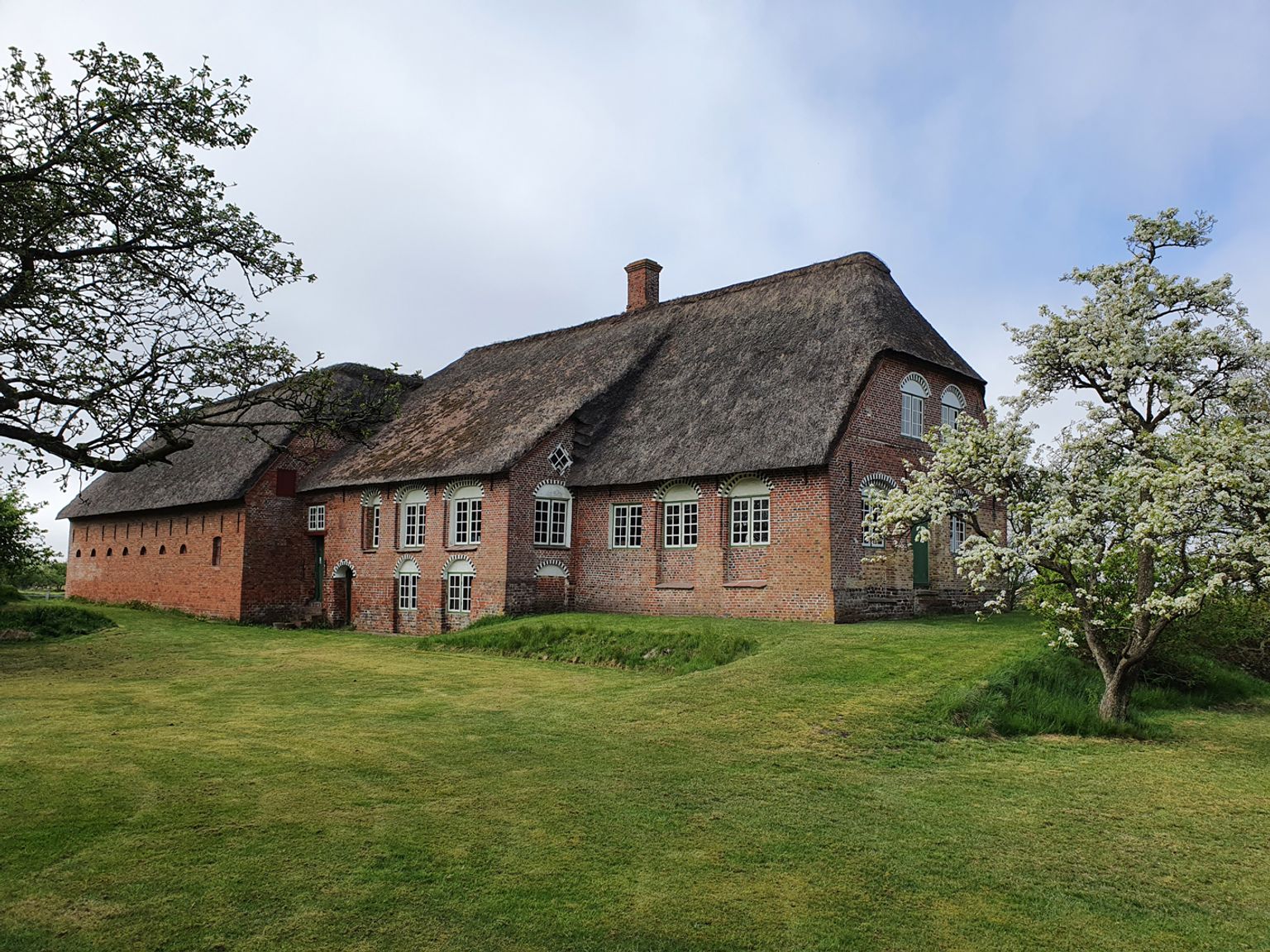
The whale skeleton

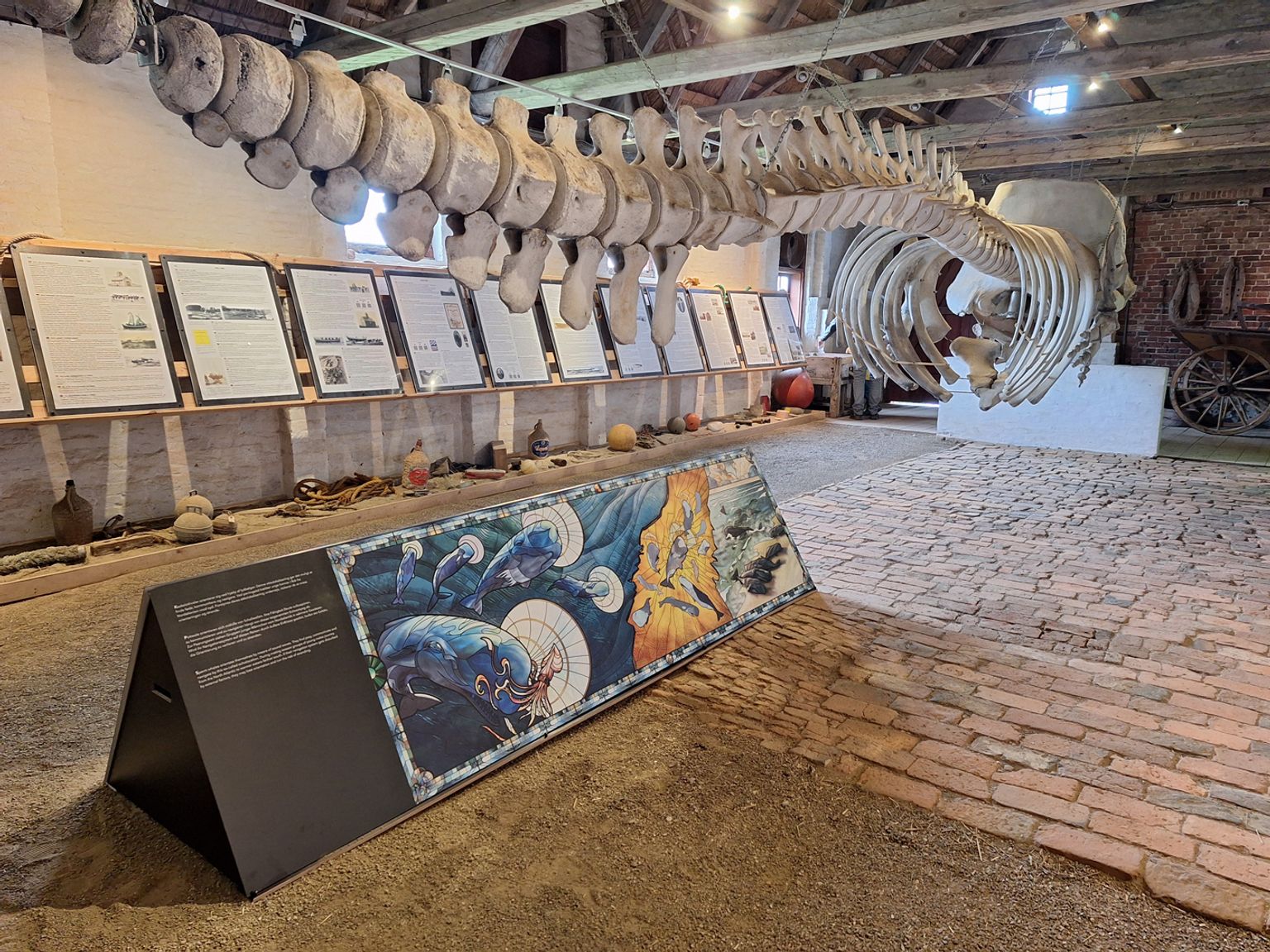
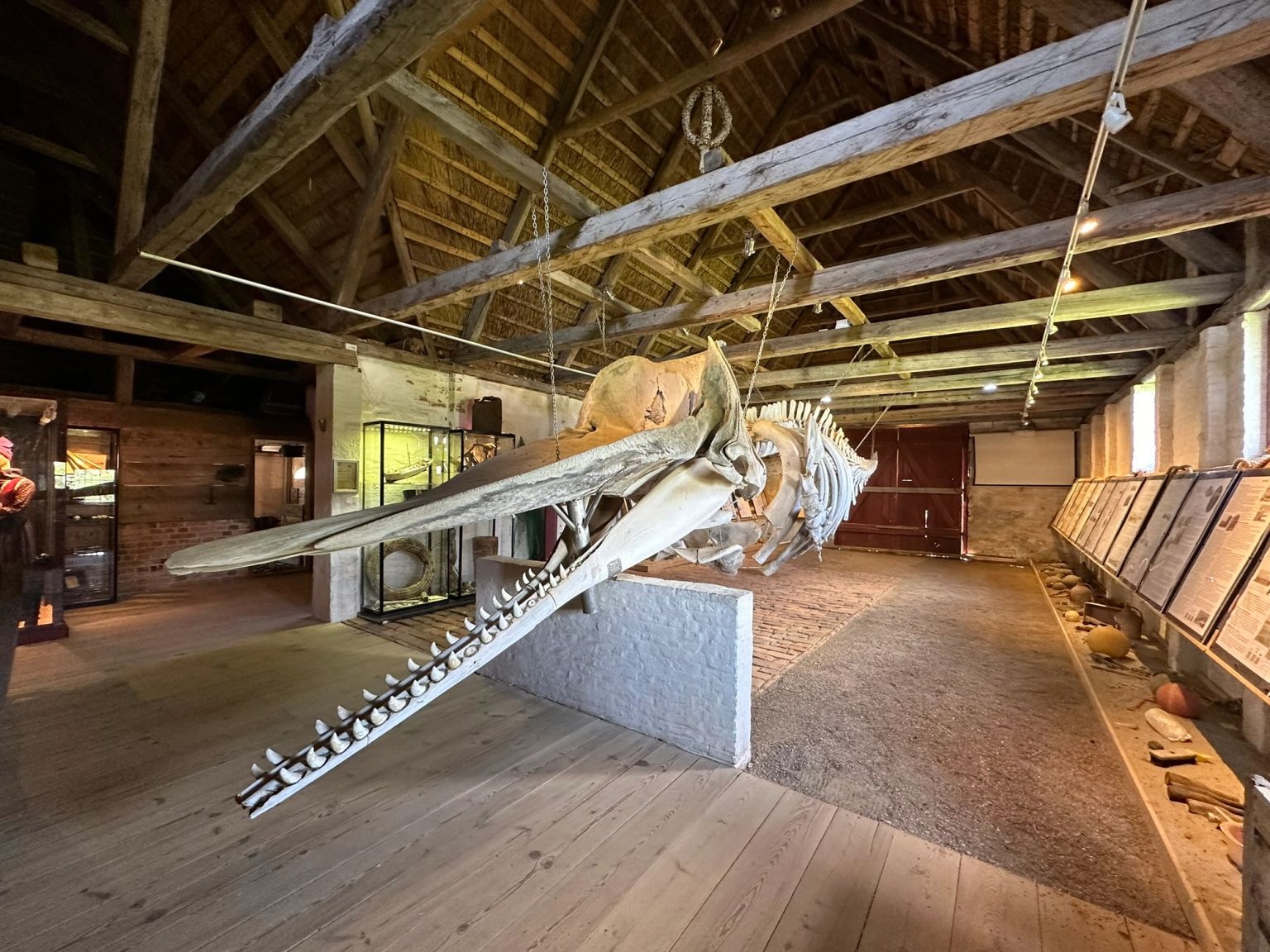
Sperm whale skeleton displayed in the barn at The Sea Captain's House, showing teeth and ribcage beneath the original timber roof

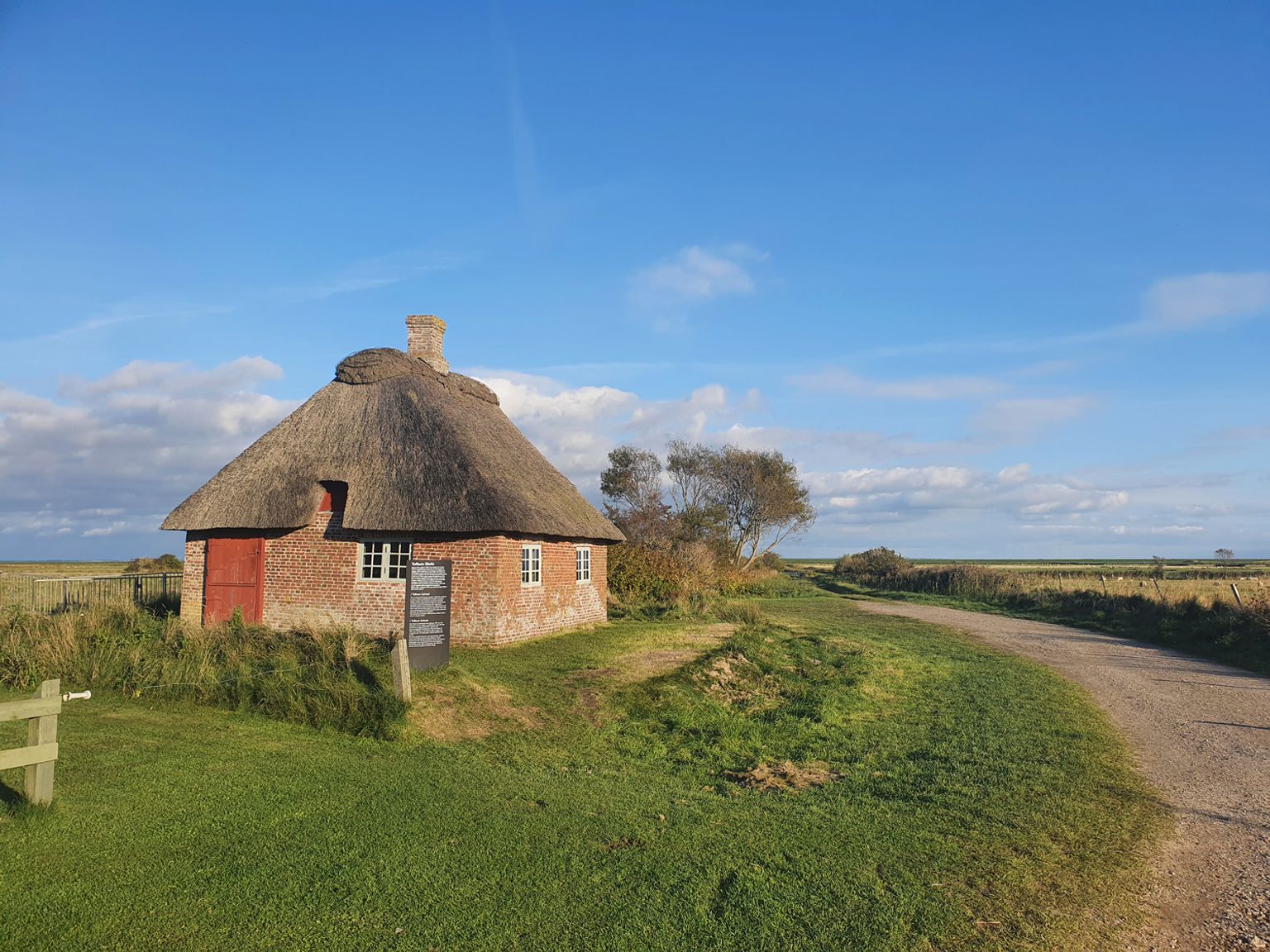
The Sea Captain's House - Laden

Have you ever had a close encounter with a giant of the deep? In the barn, you can. See the skeleton of a 15m long sperm whale that stranded on Rømø.

The stench of decay. That was the first thing that struck those who witnessed the stranding, death and decaying of 16 sperm whales in 1996. The stench of rot filled the air and lingered in the clothes of curious spectators for a long time after. Fortunately, today, the smell is long gone when you meet the young whale bull in the barn.

1.

In the belly of the whale

Walk around and inside the world's largest predator: the sperm whale. Imagine how much bigger the whale must have been with its nose, body and tail. The front part of the sperm whale's enormous square head is called the ‘nose’, and it can weigh several tonnes on its own.
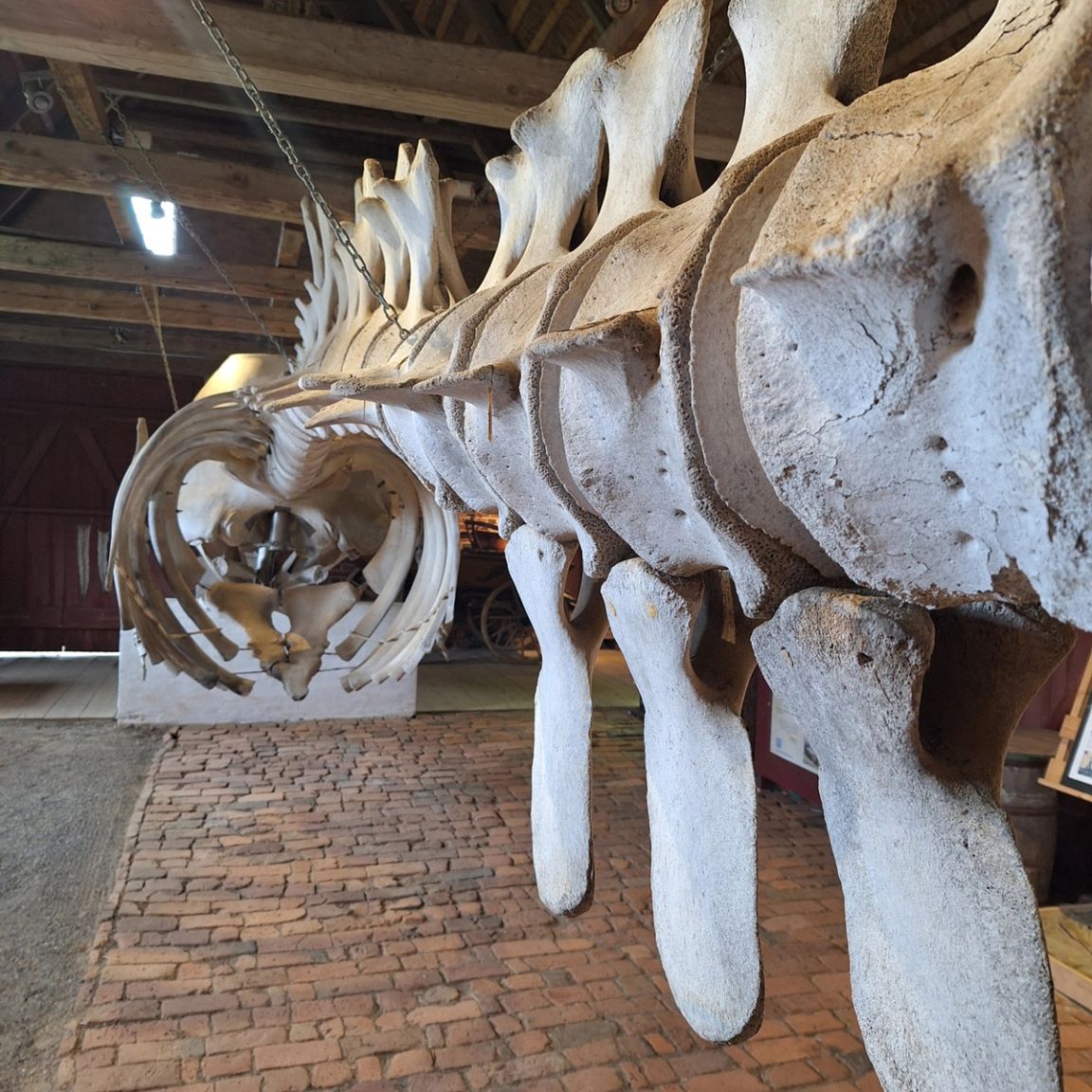
Close-up of the sperm whale skeleton in the barn showing upper jaw teeth and massive cervical vertebrae

2.

Sperm whale skeleton and illustrated interpretation panel about whales in The Sea Captain's House barn with exhibition materials along the wall

Poor sight, but great at navigation

Sperm whales spend most of their lives in the deep sea, in total darkness, hunting large squids. They do not have particularly good eyesight or sense of smell. To navigate, communicate, and find food, they use echolocation, creating sound waves inside their nose. If their echolocation is disrupted along the way, they risk losing their bearings, entering shallow waters and becoming stranded.
Sperm whale skeleton and illustrated interpretation panel about whales in The Sea Captain's House barn with exhibition materials along the wall

3.

Denmark's largest stranding of large whales

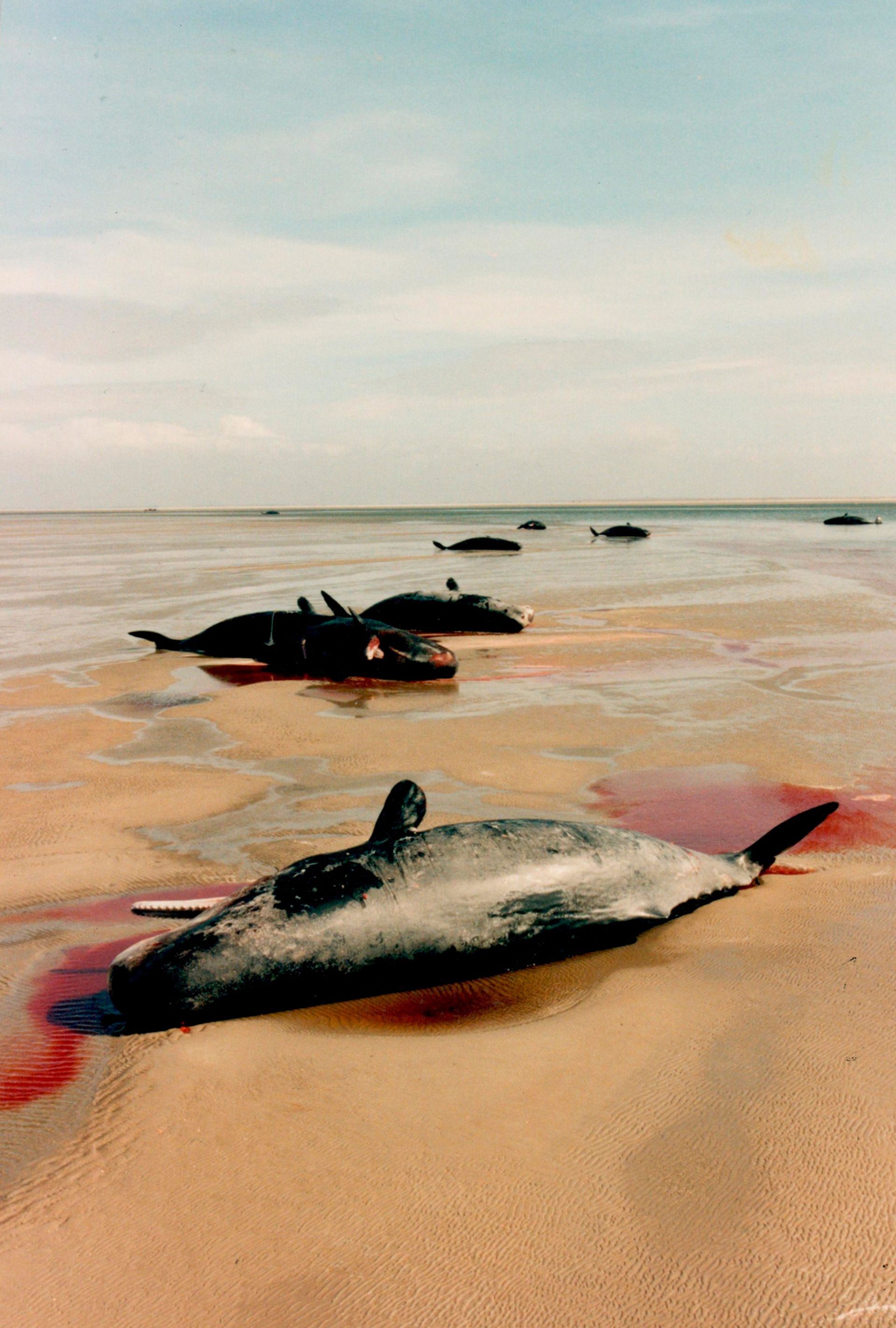
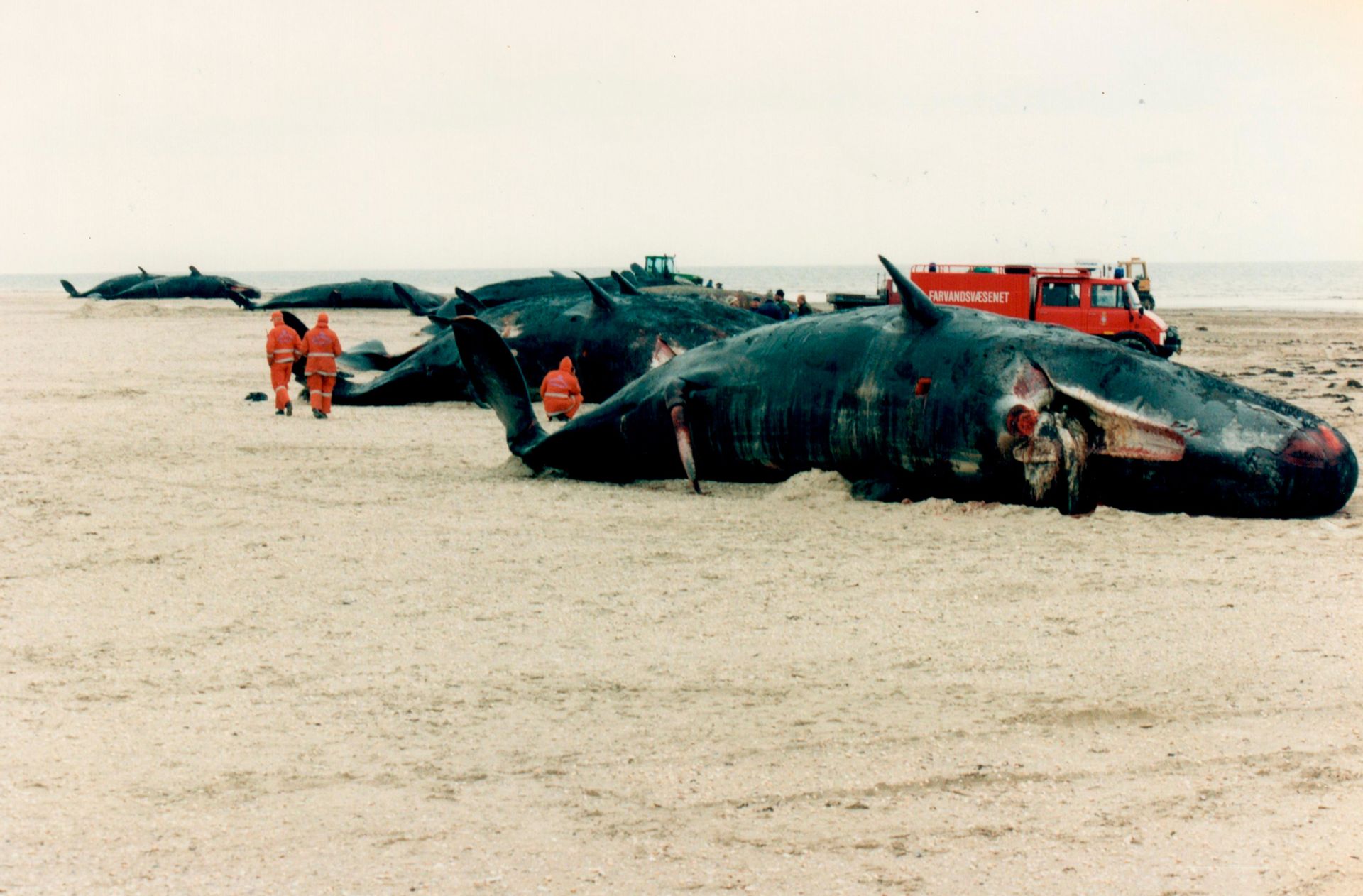
In 1996, 16 sperm whales stranded on Rømø; the year after another 13. Why? Despite several investigations, no clear answer was found. The most qualified guess is a navigation error. During their annual migration to the equator, they may mistakenly have taken the route between Norway and Scotland and thus strayed into the shallow waters of the North Sea, where the risk of stranding was high.
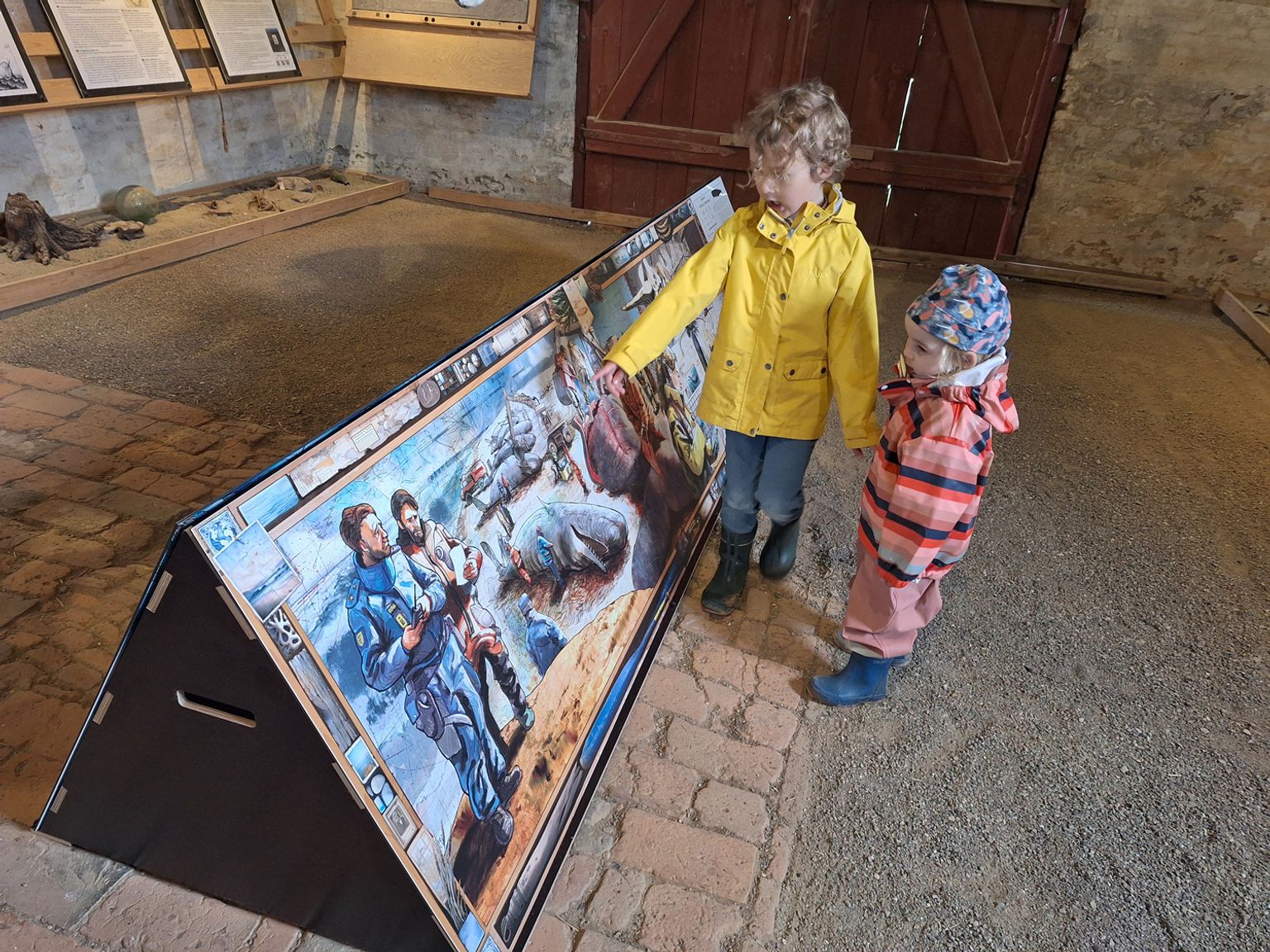
Two children exploring an illustrated interpretation panel about the sperm whale stranding in The Sea Captain's House barn

Photographs from the stranding in 1996
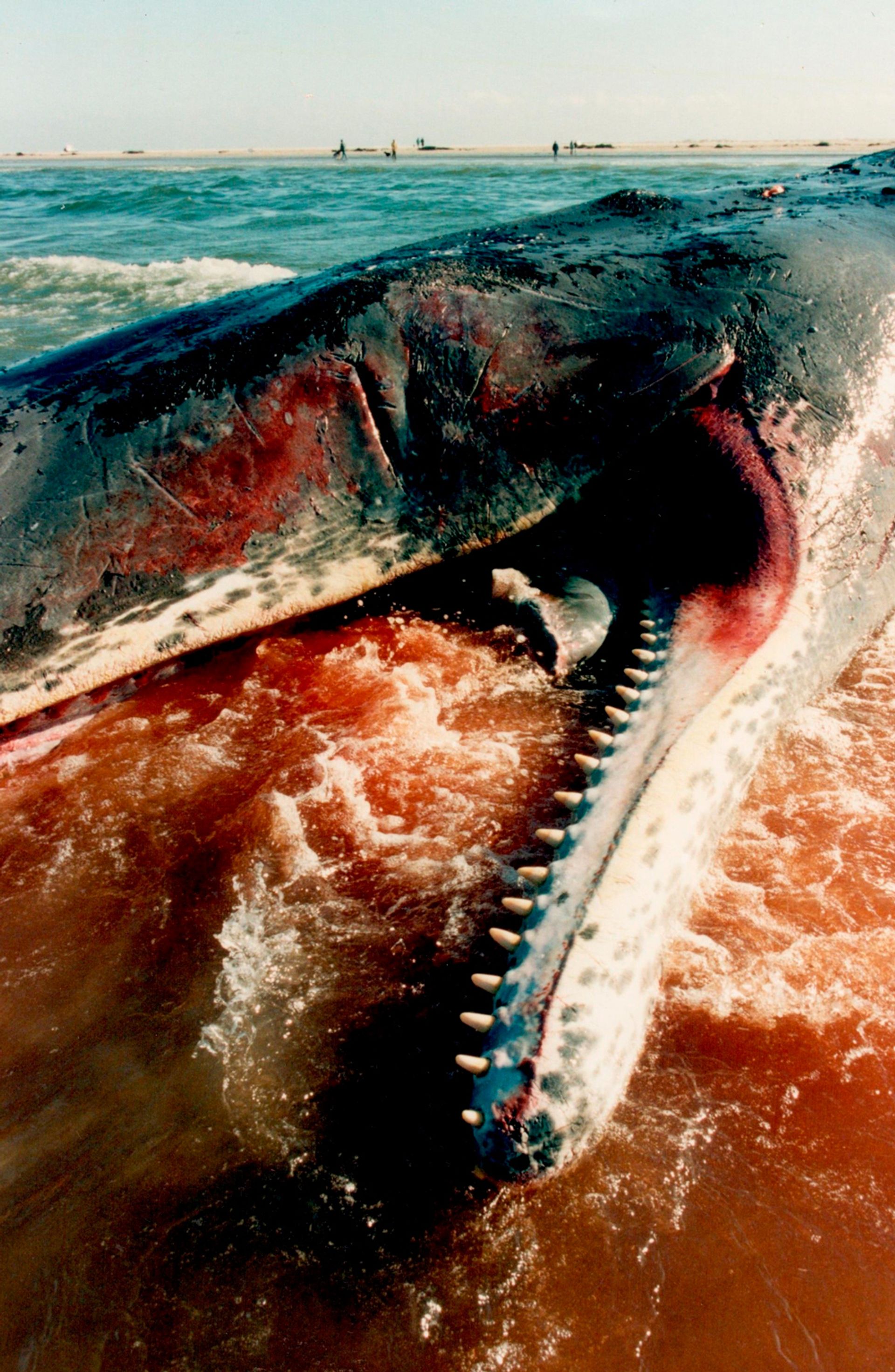
Close-up of a stranded, dead sperm whale's head and lower jaw with teeth at the waterline on Rømø, 1996. Photo: Jørgen Kølle
Photo by Jørgen Kølle
Close-up of a stranded, dead sperm whale's head and lower jaw with teeth at the waterline on Rømø, 1996. Photo: Jørgen Kølle
Multiple stranded sperm whales in a row along Rømø beach, 1996. Photo: Jørgen Kølle
Photo by Jørgen Kølle
Multiple stranded sperm whales in a row along Rømø beach, 1996. Photo: Jørgen Kølle
Rescue crews in orange suits and a Danish Maritime Authority vehicle by the stranded sperm whales on Rømø, 1996. Photo: Jørgen Kølle
Photo by Jørgen Kølle
Rescue crews in orange suits and a Danish Maritime Authority vehicle by the stranded sperm whales on Rømø, 1996. Photo: Jørgen Kølle
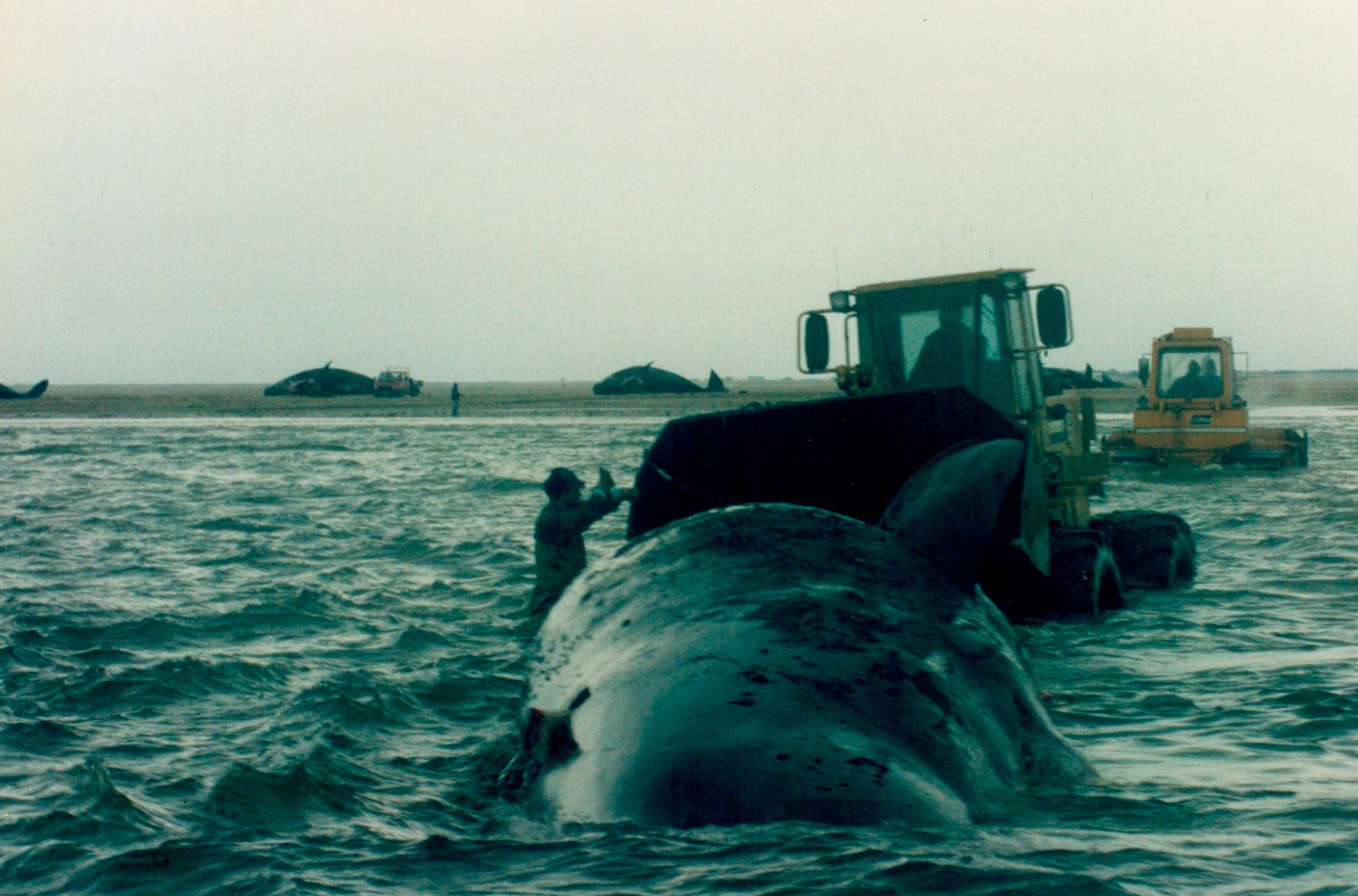
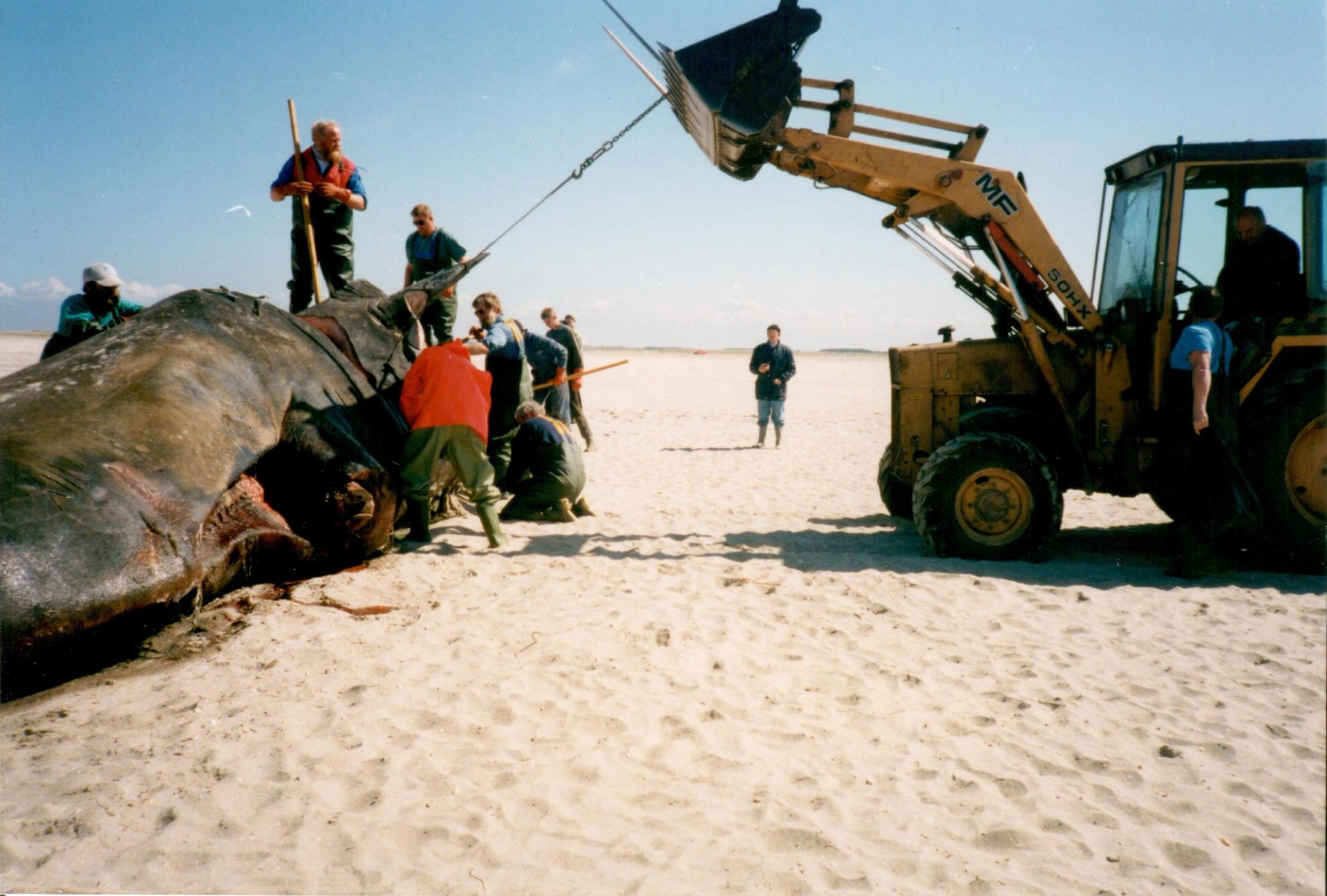
Front loader and workers handling a stranded sperm whale in the surf at Rømø, 1996. Photo: Jørgen Kølle
Photo by Jørgen Kølle
Front loader and workers handling a stranded sperm whale in the surf at Rømø, 1996. Photo: Jørgen Kølle
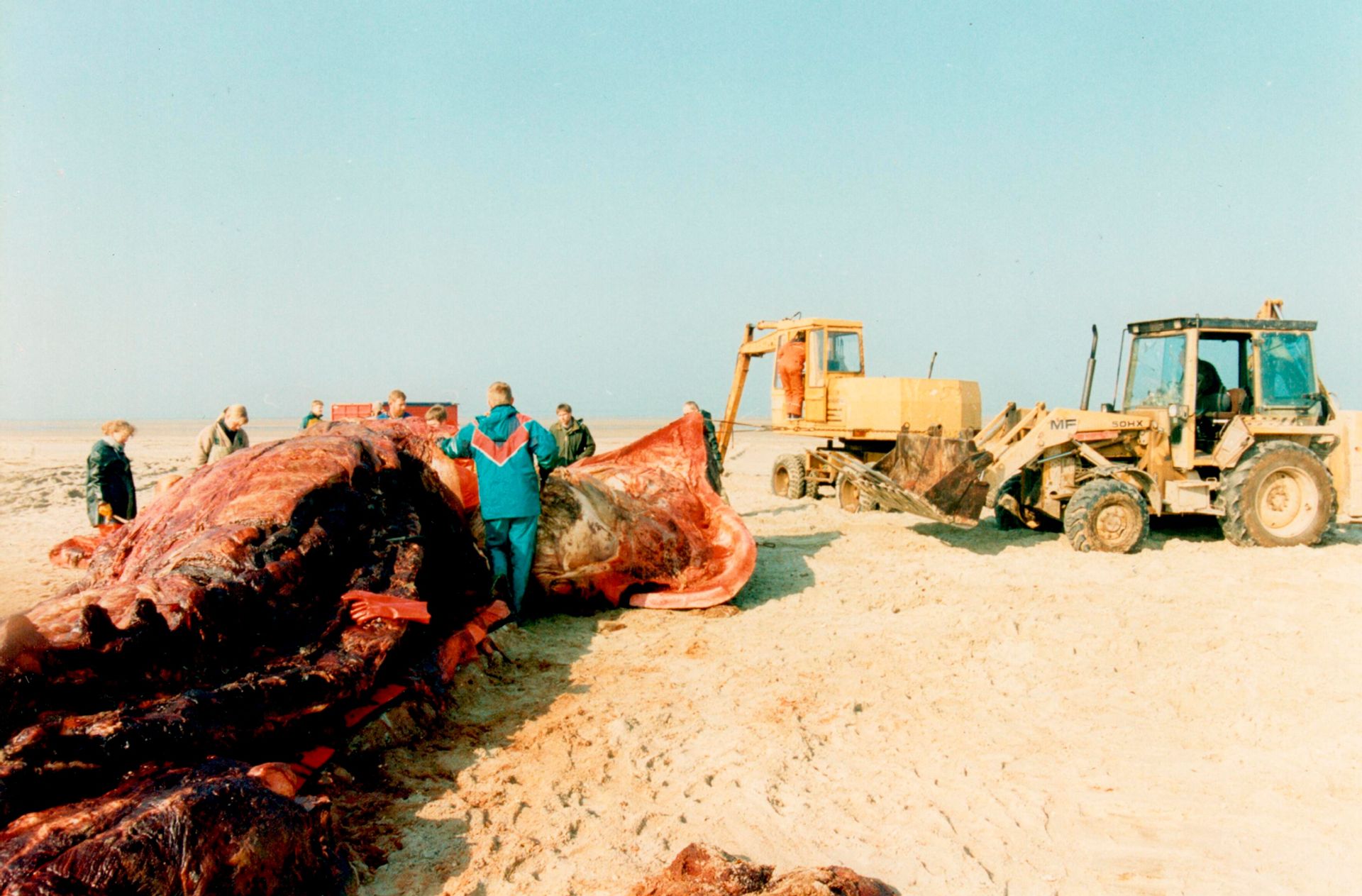
Recovery team dissecting a stranded sperm whale with a front loader on Rømø beach, 1996. Photo: Jørgen Kølle
Photo by Jørgen Kølle
Recovery team dissecting a stranded sperm whale with a front loader on Rømø beach, 1996. Photo: Jørgen Kølle
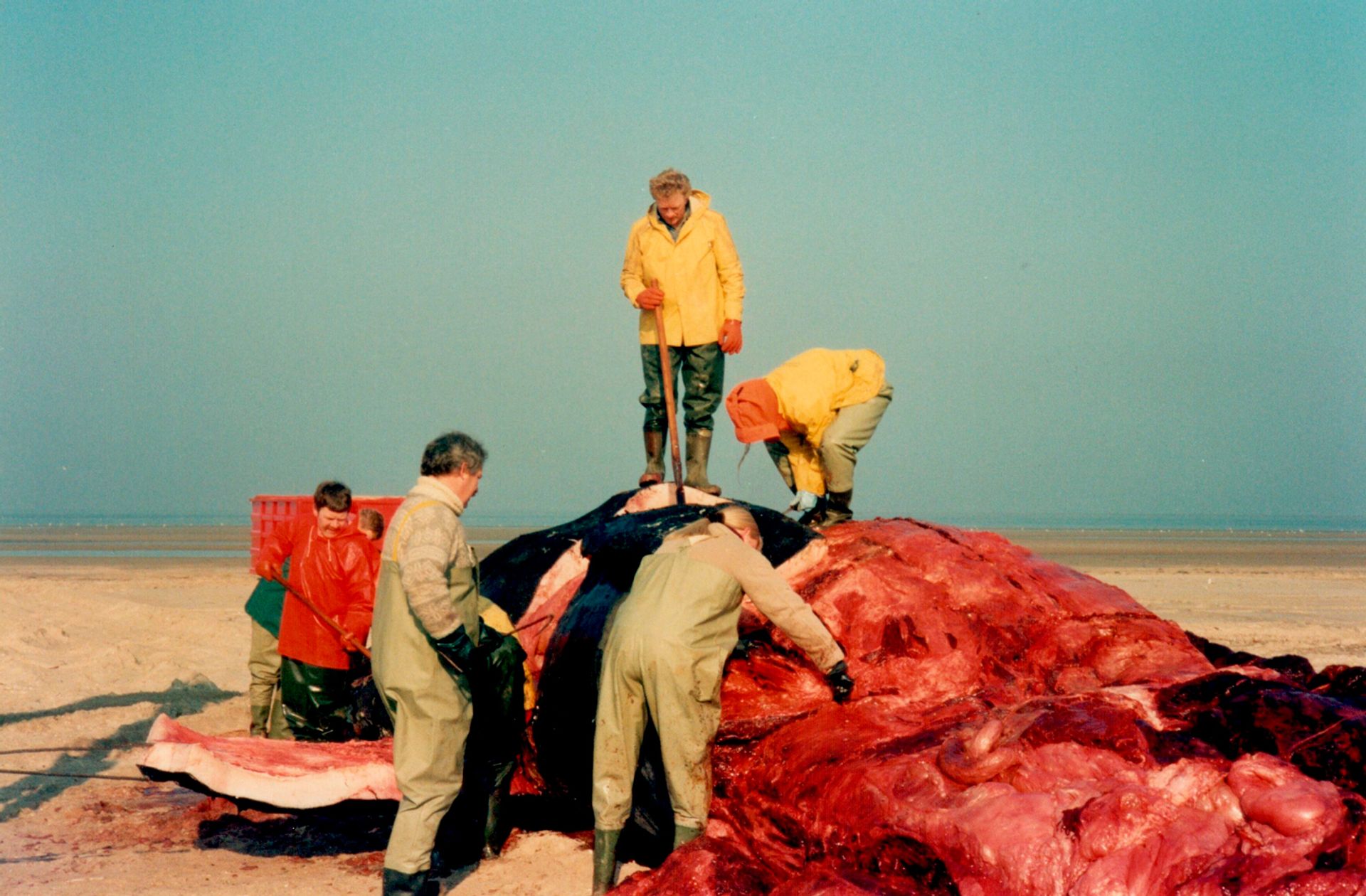
Four men conducting a scientific dissection of a stranded sperm whale on Rømø beach, 1996. Photo: Jørgen Kølle
Photo by Jørgen Kølle
Four men conducting a scientific dissection of a stranded sperm whale on Rømø beach, 1996. Photo: Jørgen Kølle
Stranded and dead sperm whale on Rømø beach in 1996, surrounded by rescue workers and a front loader during recovery
Photo by Jørgen Kølle
Stranded and dead sperm whale on Rømø beach in 1996, surrounded by rescue workers and a front loader during recovery

5.

What do you do with 400 tonnes of whale?

The task of removing a whole pod of stranded whales included towing the carcasses, flensing and skeletonizing, sampling, securing scientific data, disposal of the many tons of biological remains, and deciding where the cleaned skeletons should ultimately go. Heavy machinery had to be employed, not to mention all the people who put an enormous effort into the task - all to the dominant stench of rotting whale meat, covered in blood, sand and sperm oil from whales’ noses.

The skeletonized raw parts were left in a tidal channel for six months, where microorganisms and the sea took care of thorough cleansing. Then, conservators prepared the skeleton for the exhibition.
Closed today


Admission

  • Under 18 years of age
    Free
  • Adult
    DKK 70
  • Adult - buy ticket online
    DKK 63
  • Group ticket (10+ adults)
    DKK 55

The ticket is valid for 1 year from the date of purchase. Children under 15 years of age must be accompanied by an adult.

  • If there are more than 10 of you, please let us know when you’re arriving. That way, we can ensure the best experience for you and our other guests.
    Book a group visit

Groups

If there are more than 10 of you, please let us know when you’re arriving. That way, we can ensure the best experience for you and our other guests.Book a group visit